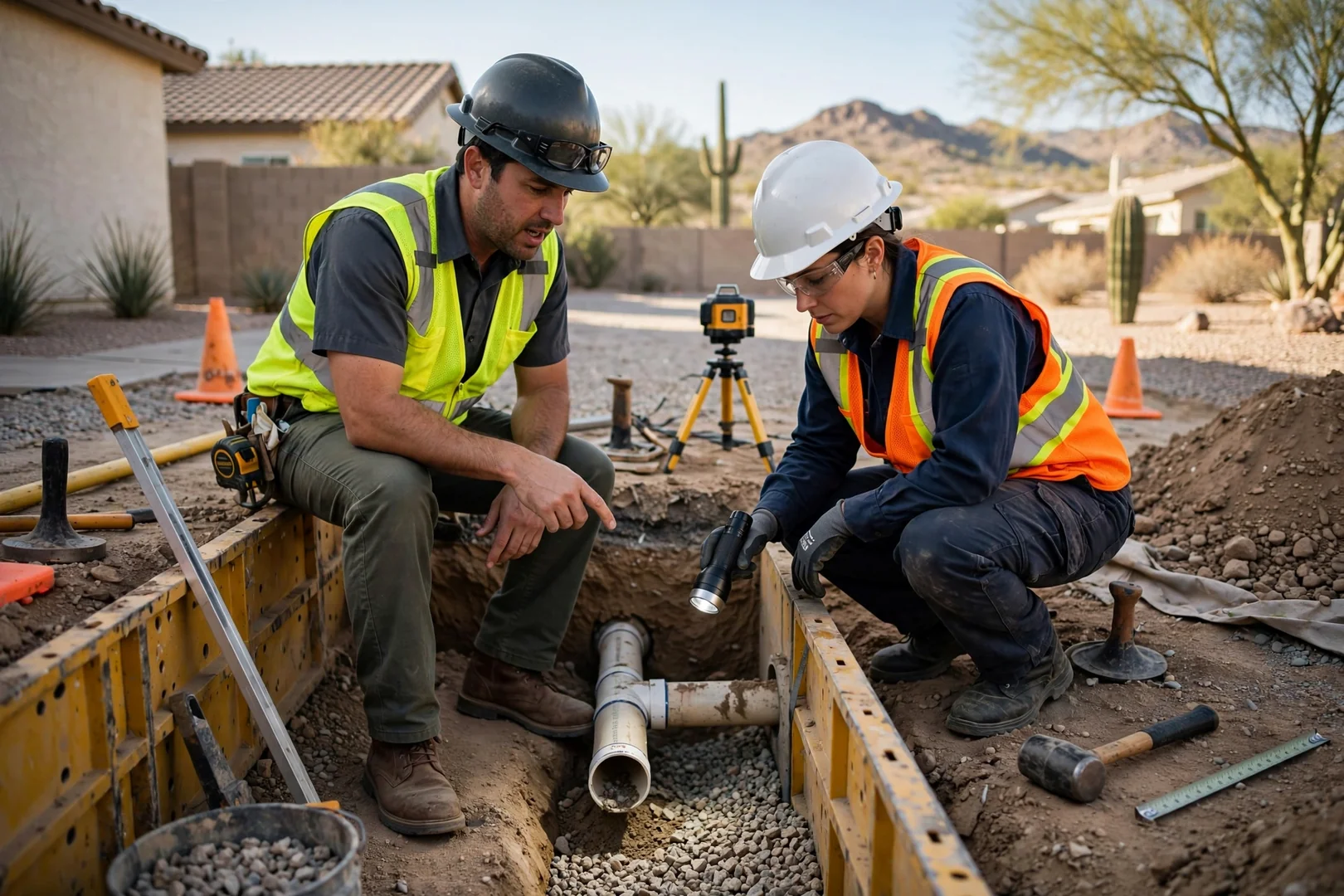
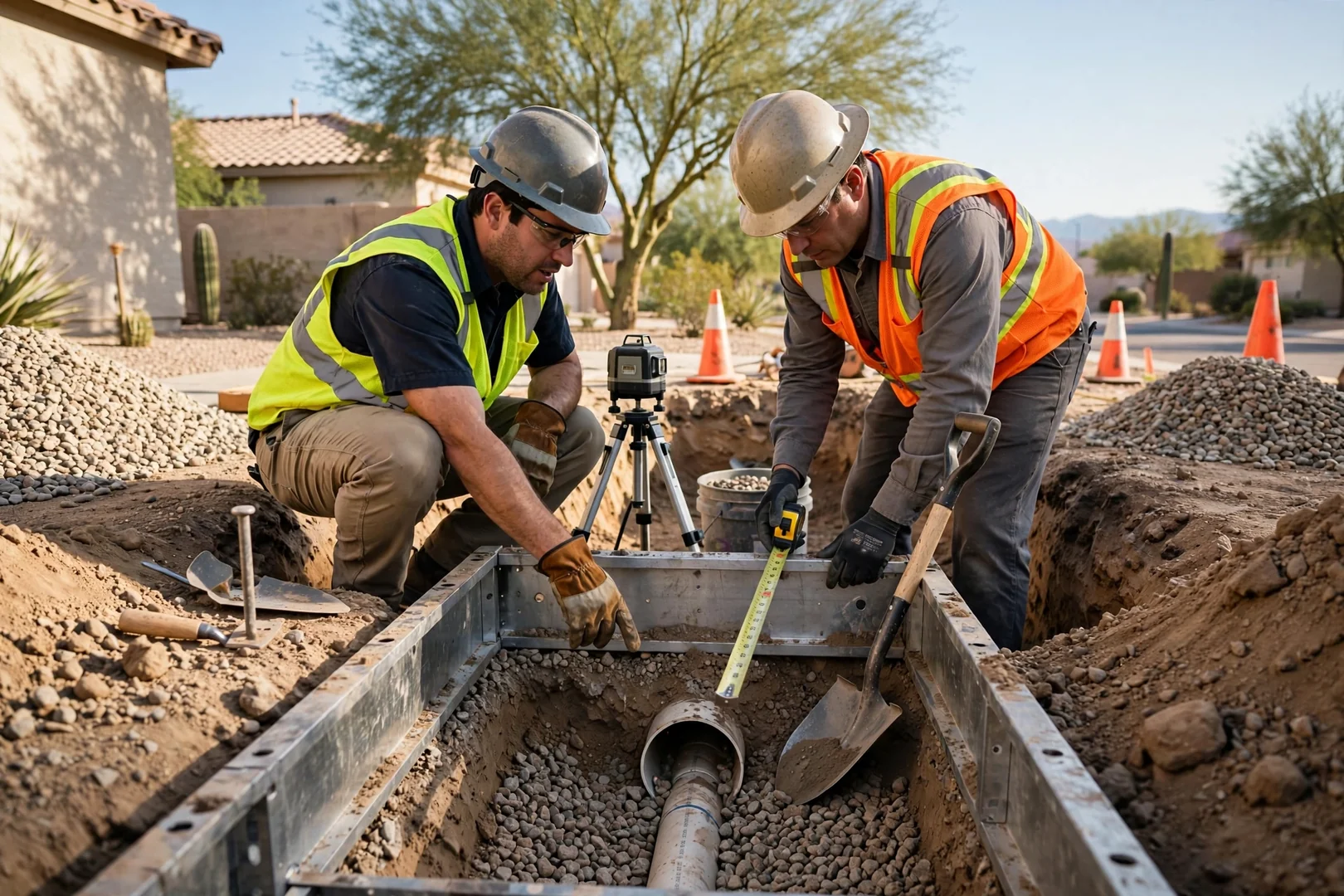
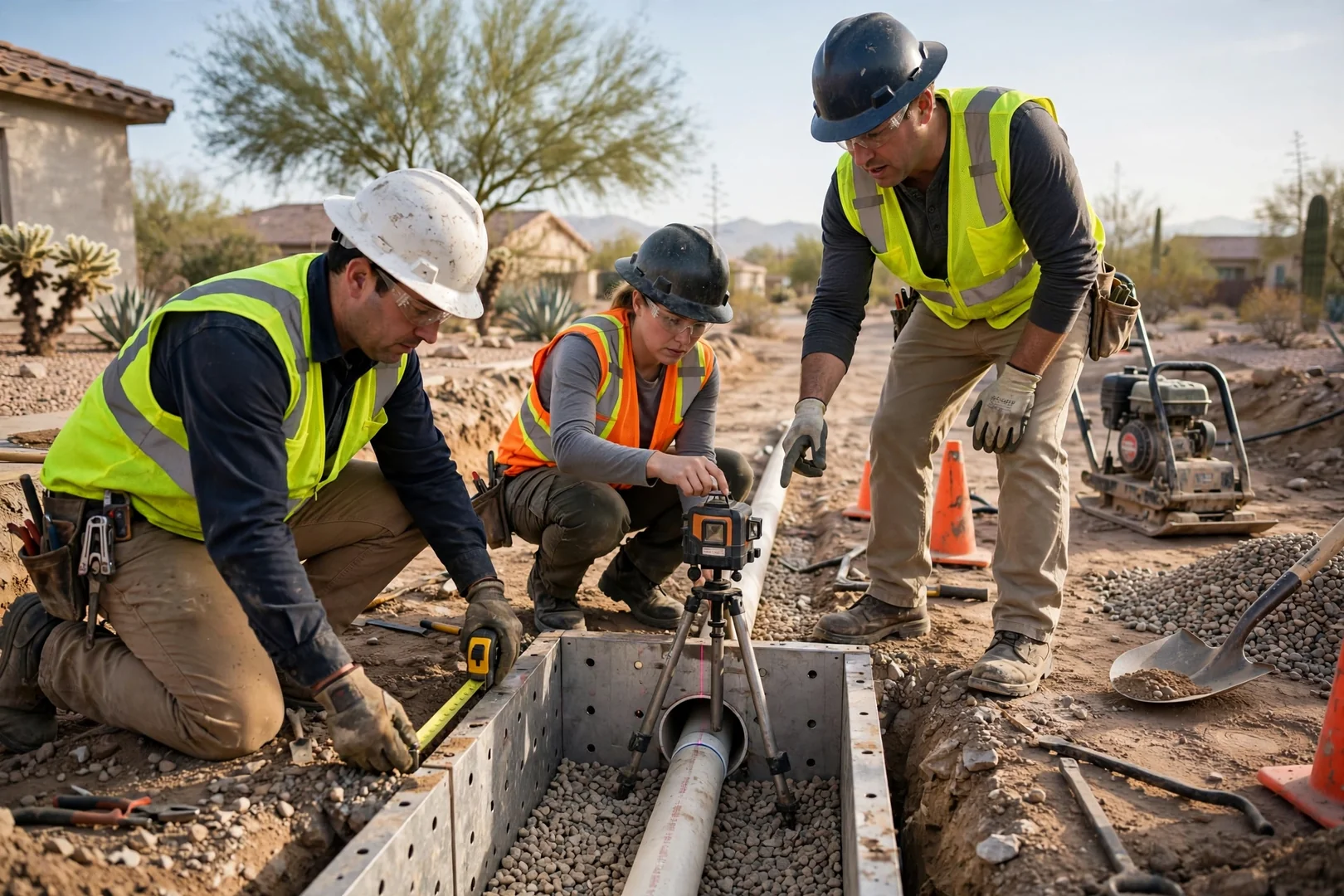
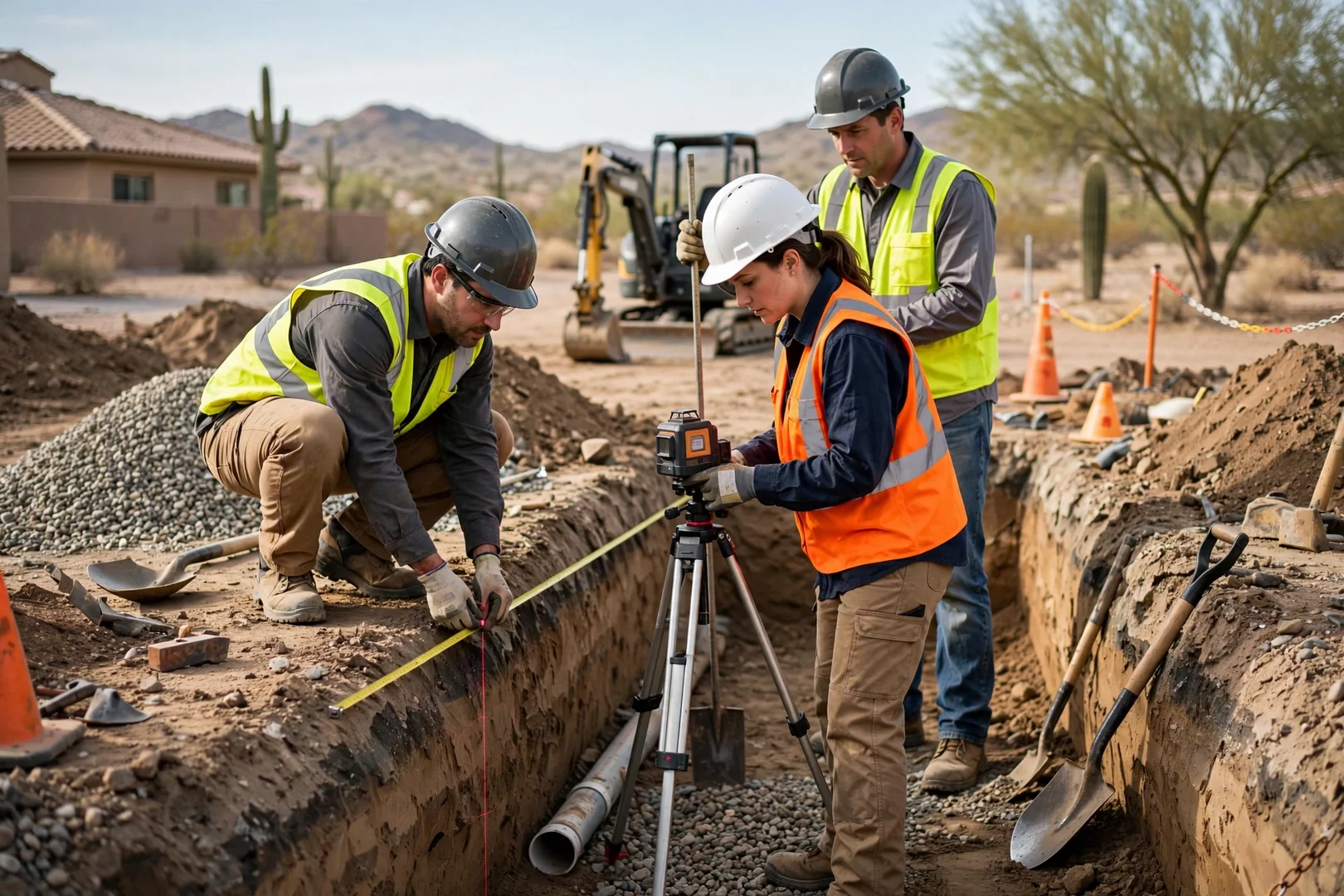
Glendale homeowners, builders, and commercial owners planning new footings, a basement, or a structural addition need excavation cut to exact plan depths and dimensions. Much of Glendale sits on caliche layers and expansive clay soils, so our trained technicians verify elevations with laser levels, cut footing trenches to grade, and plan over-excavation and compaction where the soil report calls for it. Measurements come first. Glendale Excavation Co is scheduling 2026 projects now, and planning digs ahead of the summer heat keeps crews, inspections, and concrete pours on a steady sequence.
What Our Foundation & Basement Excavation Service Includes
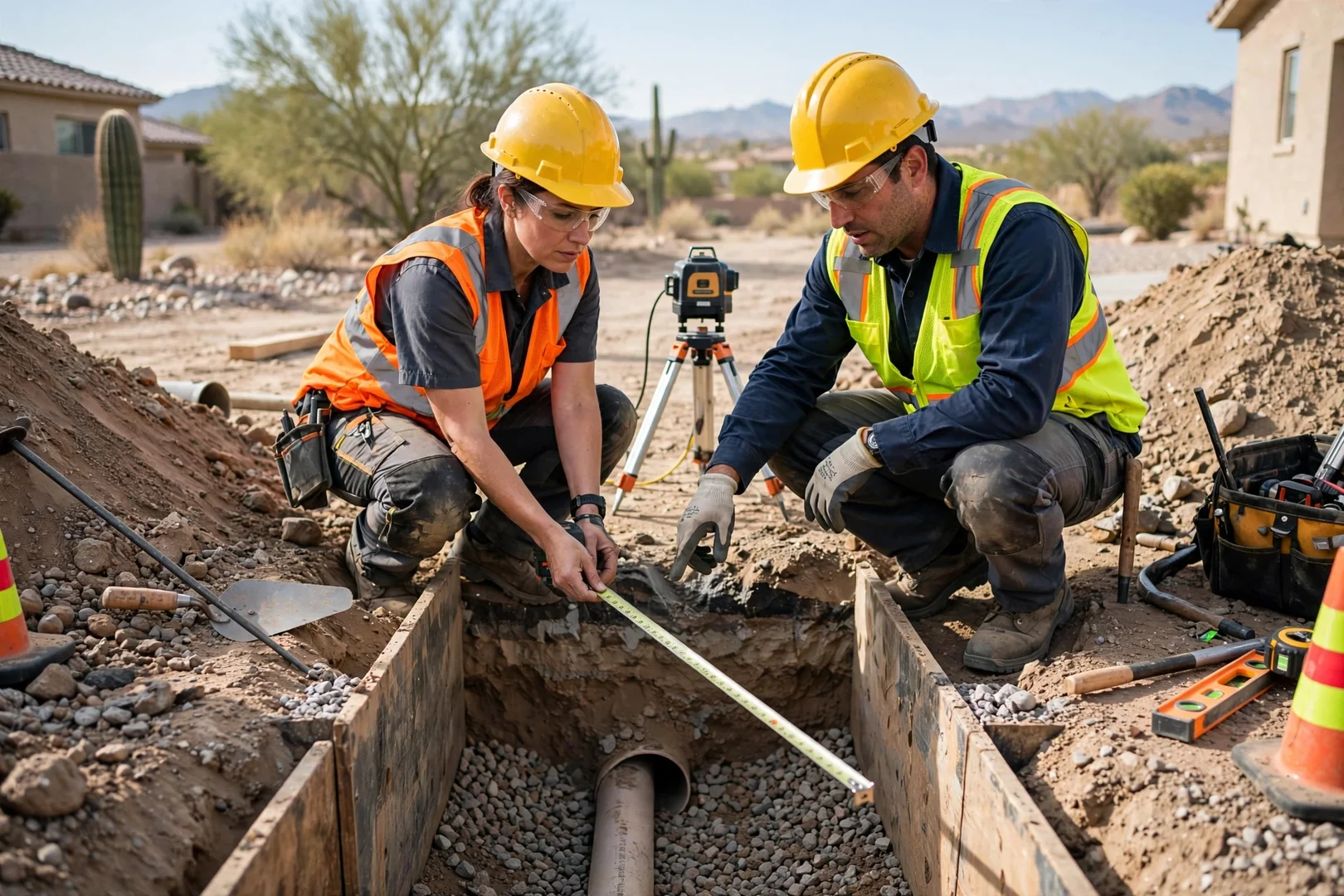
Foundation & Basement Excavation is the process of removing and shaping soil to the exact depths, widths, and elevations required for a structure’s footings, stem walls, or basement, and at Glendale Excavation Co it includes layout verification, digging, soil preparation, and backfill across Glendale properties. Each project starts with a review of the plans and any geotechnical report, followed by utility locating through Arizona 811 and staking of building corners and offsets. Our trained technicians then cut footing trenches and basement walls with properly sized excavators, checking grade with laser levels at set intervals so the bottom of excavation stays within tolerance. Where caliche or loose fill appears, we discuss over-excavation, moisture conditioning, and compacted engineered fill before any concrete is placed. Nothing is guessed. The same sequence applies to single-family homes, commercial pads, and multi-unit buildings, and our 2026 scheduling accounts for monsoon rain and summer heat that affect open excavations, with written estimates and a post-job walkthrough on every job.
When Should Glendale Homeowners Schedule Foundation & Basement Excavation?
Glendale property owners should schedule foundation and basement excavation when they are building new footings, adding a basement or addition, or correcting soil conditions that are already causing structural movement. Common signs include stair-step cracks in block walls, doors that bind in their frames, and slab cracks that widen after each monsoon season, often traced to undercompacted fill or expansive clay soils. These symptoms rarely stop alone.
Other problems surface during planning, such as a caliche layer that blocks required footing depth, poor drainage that ponds water against the foundation, or a 2026 soil report that calls for over-excavation before new construction. Glendale Excavation Co addresses each condition through measured excavation, removal of unsuitable soil, and compacted backfill placed in controlled lifts with density checks. The result is stable bearing soil.
Frequently Asked Questions About Foundation & Basement Excavation in Glendale
These answers cover the questions Glendale homeowners most often raise before a foundation or basement dig begins in 2026. Each one focuses on footings, subgrade preparation, soil conditions, and site logistics specific to this service.
General excavation topics are addressed elsewhere on our site. This section stays focused on foundation work. If your plans include a stem wall, slab footing, or full basement, the details below will help you prepare.
Plan to contact us once your engineered foundation plans and footing details are finalized, because scheduling depends on permit approval and a completed Arizona 811 utility locate before any digging starts. We review your plan set, confirm footing depths and dimensions, and then coordinate a start date around those requirements. Early contact helps with sequencing.
A typical foundation excavation scope includes layout verification, digging to the plan depth for footings or a basement, over-excavation for working room, spoil handling, and preparation of the subgrade for inspection. Your written estimate lists each item separately, including whether spoils are hauled off or stockpiled for backfill. Nothing is left implied.
Clear a path wide enough for an excavator and dump truck, move vehicles and outdoor items away from the dig area, and identify any private lines such as irrigation, low-voltage lighting, or pool plumbing. Arizona 811 marks public utilities only. Private line locations you share help us protect them during trenching for the footings.
Pricing in 2026 is calculated from the measured cubic yardage of soil removed, the depth of the footing or basement cut, soil hardness, haul-off distance, and any shoring or benching the excavation requires. We take these measurements on site before writing your estimate. Exact figures require that assessment.
Glendale soils often contain caliche layers and expansive clay, which can slow excavation, require rock-breaking attachments, and demand careful subgrade compaction before footings are formed. Clay that swells after monsoon rain can also affect bearing surfaces. We check soil conditions at the bottom of the cut before calling for inspection.
How Much Does Foundation & Basement Excavation Cost in Glendale?
Foundation & Basement Excavation pricing in Glendale depends primarily on excavation depth and footprint, soil conditions such as caliche, and the volume of spoil that must be hauled away, so 2026 estimates are built from measured site data rather than a flat rate. Cubic yardage is the starting point. Deeper basement cuts and wider over-excavation for formwork access increase the total volume removed.
Hard caliche may require a hydraulic breaker, which adds equipment time. Spoil haul-off and disposal cost more than stockpiling soil on site for later backfill, and deeper cuts may need benching, sloping, or shoring to meet trench safety standards. Tight side-yard access in older Glendale neighborhoods can also limit equipment size. Exact pricing requires a site assessment, and every project begins with a free written estimate that itemizes each of these factors.
- Foundation & Basement Excavation Process -
How Do We Perform Foundation & Basement Excavation in Glendale?
Our Foundation & Basement Excavation process follows a three-step sequence of site verification, controlled digging, and subgrade preparation checked against your plans. In 2026, every Glendale project starts with utility locates and grade staking. Nothing is guessed.
Site Verification and Layout
Before any equipment moves, we confirm the Arizona 811 utility locate, review your foundation plans, and stake the footprint and benchmark elevations. Measurements are checked twice. This layout guides every cut that follows on your Glendale property.
Controlled Excavation to Plan Depth
Trained operators dig in measured passes, checking grade with a laser level as the cut approaches footing or basement depth. Caliche is broken out where needed, and walls are benched or sloped for safety. Spoils are stockpiled or loaded for haul-off as listed in your estimate.
Subgrade Preparation and Walkthrough
Once plan depth is reached, the bottom of the excavation is trimmed, cleaned of loose material, and compacted to create a firm bearing surface. We then verify dimensions against the plans. A post-job walkthrough confirms the site is ready for inspection and forming in 2026.
Precision Foundation Excavation Standards
Why Choose Glendale Excavation Co for Foundation & Basement Excavation?
Glendale Excavation Co handles foundation and basement excavation through a documented, measured process that starts with utility locating and soil evaluation and ends with a verified subgrade ready for footings. Before any digging begins, our trained crew reviews the site plan, confirms 811 utility marks, and checks the native soil, since many Glendale lots sit on caliche layers and expansive clay that affect benching and slope decisions. Excavation depth and footprint are checked against plan elevations with a laser level while the excavator works. Every estimate is written. Each one lists the dig dimensions, spoil handling, and shoring or benching approach so the scope is clear before the first bucket of soil moves.
Throughout each 2026 project, we photograph the open excavation at key stages, including bottom-of-footing grade, subgrade compaction, and trench wall condition, so you have a visual record for your builder or the Glendale building inspector. Over-excavated areas are corrected with properly compacted fill rather than loose backfill, and spoil piles are kept back from the excavation edge in line with OSHA trench safety practices. Small details matter here. Once the dig is complete, we walk the site with you to review grade checks, drainage paths, and any notes for the foundation contractor. A scheduled follow-up after the footings or walls go in lets us confirm that backfill and final grading meet the same standard.
Schedule Foundation & Basement Excavation in Glendale for 2026
Before any footing trench or basement cut begins, our trained crew reviews your soil conditions, utility locates, and plan dimensions for your Glendale property. Each request starts with a free written estimate that outlines excavation depth, shoring needs, spoil haul-off, and backfill compaction steps, with no obligation to proceed. Scheduling is quick and organized. Planning a 2026 build means securing grade checks and layout staking early, especially with caliche layers common in Glendale soils. Call or email today to book your site evaluation and lock in your start date.